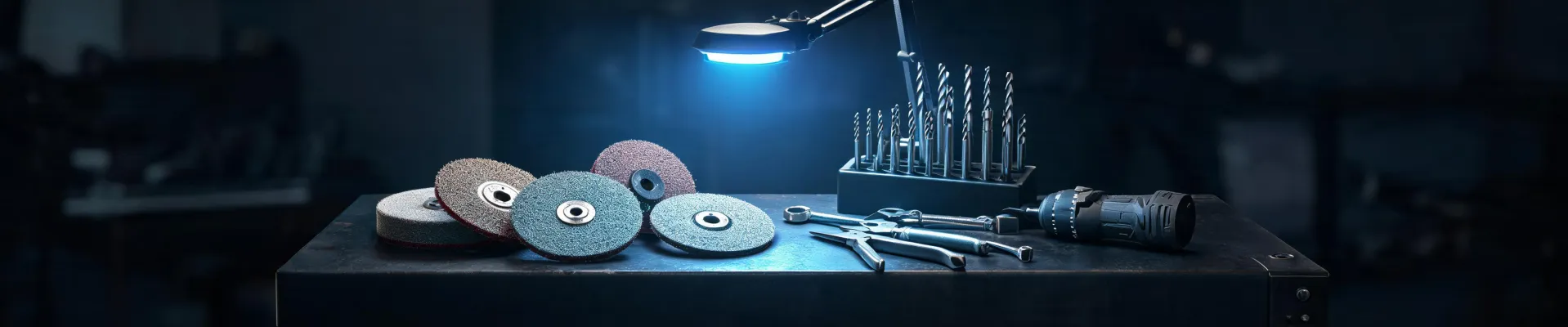
I'm the procurement manager at a 40-person metal fabrication shop. I've managed our consumables budget for six years—roughly $60,000 a year in abrasives and fasteners—and I still keep a cost-tracking sheet for every order. Some of these questions seem unrelated. They're not. One purchase order can include Norton-Abrasives grinding wheels, #10 x socket hex-drive sheet metal screws, and a box of metal lock nuts because they all go into the same steel assembly. Here are the answers I wish someone had given me sooner.
Why does Norton Abrasives Worcester MA still show up on spec sheets?
Because that's where the Norton brand started. According to Saint-Gobain Abrasives' brand history, Norton was founded in Worcester, Massachusetts, in 1885. Worcester is not just a museum exhibit; it's still part of the Norton brand's North American story. I see Norton Abrasives Worcester MA in old CAD notes and maintenance manuals, and it usually points to the U.S. industrial product lineage rather than a no-brand import.
For a buyer, that matters for two reasons. First, if a spec sheet names a Norton Abrasives Worcester MA product, you need the exact catalog number, not just the brand. Second, if a supplier substitutes a similar Norton wheel, make them prove the product number matches. Same brand, different wheel, different performance.
What is Norton Abrasives F240?
F240 is a FEPA grain-size designation—or rather, a grain-size range. The FEPA F scale runs from coarse abrasive grains down to fine polishing powders. F240 sits on the fine side, in the range most shops use for fine grinding, sharpening, and lapping. It is not a complete Norton product number.
Here's where purchases go wrong. Someone searches for Norton Abrasives F240 and assumes every item with that number is the same. It isn't. An F240 grinding wheel has a bond type, a hardness rating, and a specific shape. A loose F240 abrasive grain is a different product entirely. If your machine needs a wheel, you need the full product code. Looking back, I should have demanded the full code from a vendor the first time this came up; the F240 label alone almost cost us a redo.
What are #10 x socket hex-drive sheet metal screws?
They are self-tapping screws with a #10 thread diameter and a hex-shaped socket in the head. Instead of a Phillips or slotted driver, you use a hex bit. That means you can apply more torque before the head strips—important when the screw is making its own thread in steel.
The phrase sheet metal screw tells you the threads are hard and sharp enough to tap into thin metal. The most common length in our inventory is 3/4 inch, but length matters as much as diameter. A #10 x socket hex-drive sheet metal screw with a Type A point suits thin gauge; Type AB works better for thicker material. I also check the finish. Zinc-plated is fine for inside work, while exterior metal panels need a better corrosion-resistant coating. In other words, the screw size is the start of the specification, not the whole spec.
What is a metal lock nut?
A metal lock nut, also called an all-metal lock nut, resists loosening under vibration without relying on a nylon insert. It works because part of the nut is deliberately deformed—often an elliptical top or a slotted area—so the threads clamp against the bolt and create friction. Metal lock nuts are the usual choice when temperatures are too high for nylon or when a lock nut needs to survive repeated installation cycles without losing its locking action.
The term can be sloppy. Some suppliers say metal lock nut when they mean a nylon-insert lock nut with a metal shell. If you're replacing a fastener, ask whether the nut is all-metal or whether it has a nylon ring. I keep both in stock. All-metal nuts go on brackets near heat sources and on high-vibration parts. Nylon-insert nuts go on lighter assemblies where thread damage is a bigger concern. Both are lock nuts, but they fail differently over time.
What is an angle grinder used to grind? (NCCER answer)
In NCCER's power-tools curriculum, an angle grinder is a handheld grinder used to grind, cut, and finish metal. When the question says used to grind, the expected answer is usually metal, not wood and not plastic. On a job site, that means removing weld scale, rust, burrs, and sharp edges, or blending a surface before welding or coating.
The buyer's version of that lesson is about the consumable. The angle grinder might come from one tool manufacturer and the wheel from another. A grinding wheel, a cutting disc, and a flap disc all fit on the same grinder, but they are not the same operation. The tool is the same; the operation is not. I also check the wheel's maximum RPM against the grinder. ANSI B7.1 covers abrasive wheel safety, but the first rule is simpler: match the wheel to the task and to the machine.
When is a rush fee for Norton abrasives worth paying?
When the cost of waiting is higher than the fee. In March 2024, I had two quotes for the same Norton wheel. One was $54 and said probably Thursday. The other was $61 and had the wheel on a truck by 10 the next morning. The $7 looked like a price difference. It was really a certainty difference, and I took the $61 option.
Later that spring, I paid $185 in freight to get an abrasive overnight after a stockout. It felt excessive until I put it next to the crew idle cost if the job stopped for a day: roughly $2,400. I built a cost calculator after getting burned by hidden freight fees twice, and the policy is now simple. For planned restock, use standard shipping. For a job with a date on it, pay for guaranteed delivery. A missed deadline costs more than the markup.

Maren Jorgensen
Maren Jorgensen is an independent hand tool and torque applications analyst covering wrenches, pliers, screwdrivers, hammers, sockets, ratchets, hex keys, and tool sets. She applies ISO 6789-1 torque-tool conformance principles while examining jaw capacity, leverage, fastener engagement, torque range, accuracy, handle geometry, and material hardness. Her practical guides help tradespeople and procurement teams select suitable tools, plan controlled tightening, and compare durability without relying on brand reputation alone.
Leave a Reply