Abrasive selection help
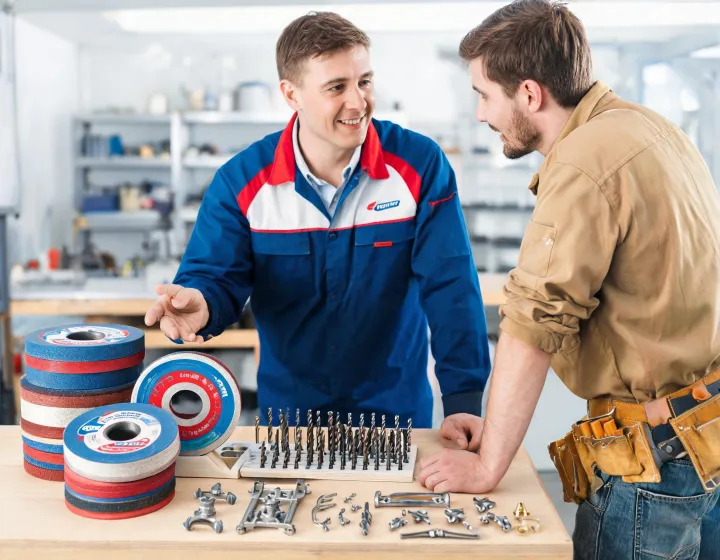
Share material, grinder size, desired finish and removal rate. The service team can help compare grinding wheels, flap discs, sanding sheets and cutoff choices for safer, cleaner work.
Tool support without the maze
Norton helps buyers move from a rough application question to a sensible next step, whether the job involves grinding wheel selection, drill bit matching, cabinet hardware alignment or hand tool replacement planning.
Guided service paths
Many tool requests begin with one uncertain detail: the material, the finish target, the fastener type or the accessory already on hand. Norton service paths keep those details visible so a buyer can ask a focused question instead of sending a broad catalog request.
Share material, grinder size, desired finish and removal rate. The service team can help compare grinding wheels, flap discs, sanding sheets and cutoff choices for safer, cleaner work.
Use the request form to describe hole size, base material, drilling depth and the power tool already in use. Norton replies with a practical direction before you commit to a larger order.
Bring questions about hinge clearances, drawer slide loads, handle finishes and job-site installation flow. Support keeps the answer tied to real cabinet work rather than abstract specifications.
When the issue is stock, replacement, coverage or a nearby dealer, Norton routes the request toward the right support path and keeps the buyer from repeating the same story twice.
Quick answers
A buyer may search by a single phrase such as "grinding wheel" or "cabinet hinge" and then face dozens of choices that look similar. That slows purchasing, creates mismatch risk and makes the next support conversation longer than it needs to be.
The inquiry starts with application details and routes toward a practical category, which makes the answer easier to verify. Buyers can compare fewer options, understand the next step and order with a clearer reason for the choice.
Ask with context
Tell Norton what you are cutting, drilling, fastening or finishing. A focused request helps the support path begin with the real work instead of a long back-and-forth.